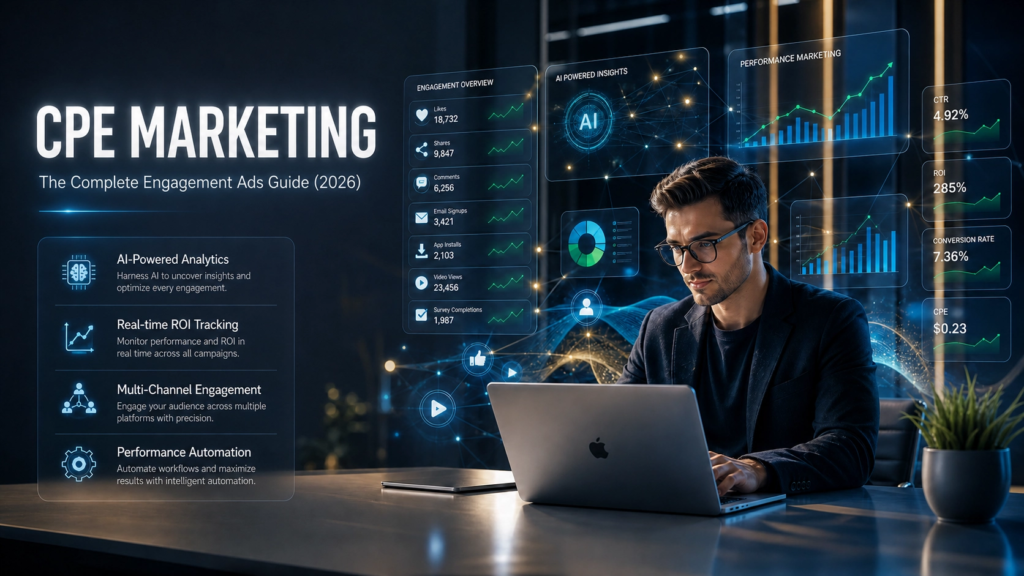
CPE Marketing: The Complete Engagement Ads Guide (2026 Beginner to Advanced)
Introduction Digital advertising has evolved rapidly over the past few years, and businesses are now focusing more on meaningful user interactions rather than simple clicks or impressions. This is where CPE (Cost Per Engagement) Marketing becomes one of the most effective performance marketing models. Unlike traditional advertising methods where advertisers pay for clicks or views, CPE Marketing allows businesses to pay only when users complete a specific engagement action. These actions may include signing up for a newsletter, watching a video, completing a survey, submitting a form, downloading an app, or interacting with social media content. Whether you are a beginner, affiliate marketer, freelancer, business owner, or digital marketing student, learning CPE Marketing can help you create profitable advertising campaigns with better ROI and lower risk. In this complete guide, you’ll learn everything about CPE Marketing, including how it works, its benefits, traffic sources, campaign strategies, optimization techniques, and best practices for 2026. What is CPE Marketing? CPE stands for Cost Per Engagement. It is a digital advertising model where advertisers pay only when users perform a predefined engagement action instead of paying for impressions or clicks. These engagement actions may include: The primary objective of CPE Marketing is to generate high-quality user interactions that are more likely to convert into customers. How Does CPE Marketing Work? The CPE Marketing process is simple and highly performance-driven. Step 1: Advertiser Creates an Offer A company creates an offer that requires user engagement. Step 2: Affiliate or Publisher Promotes the Offer Publishers use websites, blogs, social media, YouTube, paid ads, or email marketing to promote the offer. Step 3: User Completes the Required Action The user performs the required engagement, such as signing up or completing a survey. Step 4: Tracking System Verifies the Action Affiliate tracking software confirms that the engagement meets the advertiser’s requirements. Step 5: Publisher Gets Paid The advertiser pays only for verified engagements, making this a cost-effective advertising model. Why Businesses Choose CPE Marketing Businesses increasingly prefer CPE campaigns because they focus on measurable user interactions rather than vanity metrics. Major advantages include: Types of Engagement in CPE Marketing Different advertisers define engagement differently based on campaign goals. Common engagement actions include: Email Signup Collecting email addresses for future marketing campaigns. App Installation Users install a mobile application through a tracking link. Survey Completion Users answer marketing surveys to qualify as leads. Quiz Participation Interactive quizzes improve engagement and collect valuable customer data. Video Views Users watch promotional or educational videos for a specific duration. Form Submission Users complete lead generation forms with contact information. Social Media Engagement Likes, comments, shares, follows, or profile visits. Free Trial Registration Users register for software or subscription-based services. CPE vs CPA vs CPL vs CPC vs CPM Understanding the differences between advertising models helps marketers choose the right strategy. Model Payment Trigger CPE User engagement CPA Completed purchase or conversion CPL Qualified lead submission CPC Ad click CPM 1,000 impressions Which Model is Better? There is no universal answer. Best Niches for CPE Marketing Choosing the right niche greatly affects campaign profitability. Popular CPE niches include: These industries consistently generate high engagement rates. Best CPE Affiliate Networks Selecting reliable affiliate networks is essential for long-term success. Popular CPE networks include: Before joining any network, check: Best Traffic Sources for CPE Marketing Traffic quality directly impacts campaign performance. Google Ads Excellent for intent-based users searching for solutions. Facebook Ads Ideal for audience targeting based on interests and demographics. Instagram Ads Works well for lifestyle, beauty, education, and mobile app promotions. YouTube Ads Highly effective for video-based engagement campaigns. TikTok Ads Best for younger audiences and viral campaigns. Native Advertising Provides high engagement through content recommendations. SEO Organic traffic delivers consistent long-term results. Email Marketing A strong email list can generate repeat engagement without additional advertising costs. How to Create a Profitable CPE Campaign Follow these steps to maximize campaign performance. Choose a Profitable Niche Focus on industries with strong advertiser demand. Select High-Quality Offers Choose offers with high EPC and proven conversion rates. Understand Your Audience Research user behavior, demographics, interests, and pain points. Create an Optimized Landing Page Use clear headlines, persuasive content, trust signals, and strong calls-to-action. Design Attractive Creatives Use professional graphics, engaging videos, and compelling ad copy. Track Everything Monitor clicks, engagements, conversions, and ROI using analytics tools. Perform A/B Testing Test different headlines, images, CTAs, and landing pages to improve performance. Landing Page Optimization Tips Your landing page significantly influences engagement rates. Best practices include: AI Tools for CPE Marketing Artificial Intelligence helps marketers save time and improve campaign performance. Useful AI tools include: These tools improve productivity while increasing campaign efficiency. Effective CPE Marketing Strategies Successful marketers use proven engagement techniques. Offer Valuable Lead Magnets Free eBooks, templates, and checklists encourage user participation. Gamification Interactive quizzes, rewards, and challenges increase engagement. Retargeting Campaigns Reconnect with users who previously interacted with your ads. Content Marketing Publish helpful blogs, videos, and tutorials that naturally attract engaged users. Email Automation Nurture leads using personalized email sequences. Common CPE Marketing Mistakes Avoid these common mistakes: Learning from these mistakes can significantly improve campaign results. How to Measure CPE Campaign Success Track these important metrics: Regular monitoring helps identify optimization opportunities. Example CPE Marketing Campaign Imagine promoting an online marketing course. Campaign Goal: Generate email subscribers Traffic Source: Facebook Ads Offer: Free Digital Marketing Checklist Landing Page: Optimized with testimonials and a clear CTA User Action: Email signup Result: Every verified signup earns an affiliate commission while helping the advertiser build a qualified email list. This simple workflow demonstrates how CPE Marketing creates value for both advertisers and publishers. Beginner Roadmap for Learning CPE Marketing Week 1 Week 2 Week 3 Week 4 Consistent learning and testing are the keys to long-term success. Frequently Asked Questions What is CPE Marketing? CPE Marketing is a performance-based advertising model where advertisers pay only when users complete a predefined engagement action. Is CPE Marketing profitable? Yes. With the right audience, traffic source, and optimization strategy, CPE Marketing can generate consistent profits.