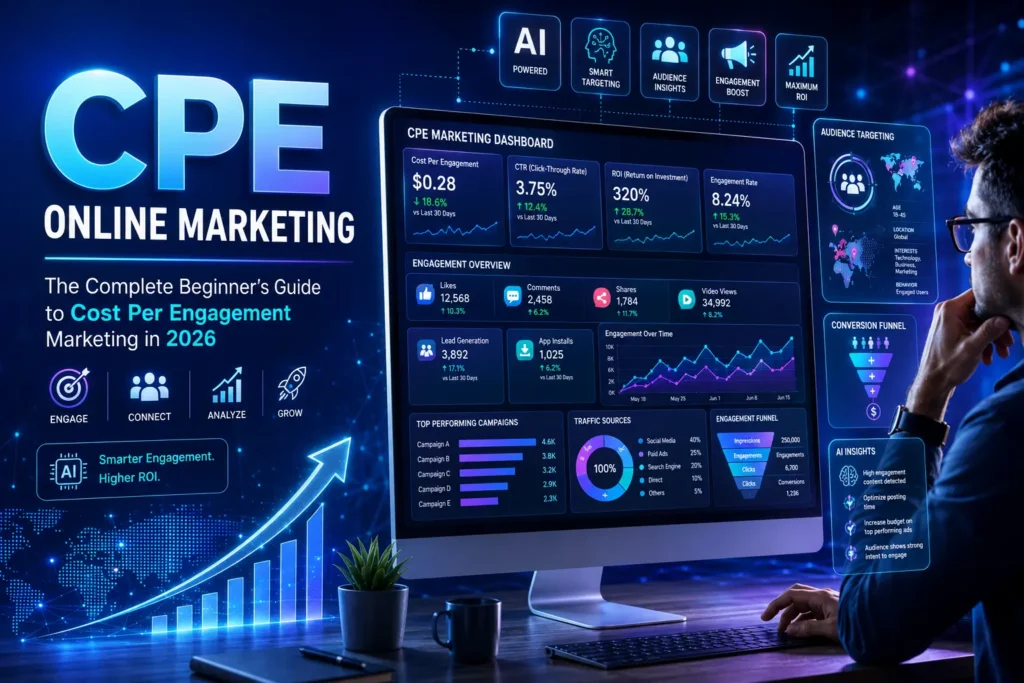
CPE Online Marketing: The Complete Beginner’s Guide to Cost Per Engagement Marketing in 2026
Introduction Digital marketing is constantly evolving, and businesses are always searching for advertising models that deliver better engagement and higher returns on investment. One such performance-based advertising model is CPE Online Marketing, also known as Cost Per Engagement Marketing. Unlike traditional advertising methods where advertisers pay for impressions or clicks, CPE marketing focuses on meaningful user interactions. Advertisers only pay when users complete a predefined engagement action, making it a cost-effective and measurable strategy for businesses, affiliate marketers, and advertisers. Whether you’re a beginner, digital marketer, business owner, or affiliate marketer, understanding CPE Online Marketingcan help you create highly engaging campaigns that generate qualified leads, increase brand awareness, and maximize marketing ROI. In this comprehensive guide, you’ll learn what CPE marketing is, how it works, its benefits, campaign strategies, best platforms, AI tools, and practical tips to run successful engagement campaigns in 2026. What is CPE Online Marketing? CPE Online Marketing (Cost Per Engagement Marketing) is a digital advertising model where advertisers pay only when a user completes a specific engagement action instead of simply viewing or clicking an advertisement. These engagement actions may include: This pricing model ensures advertisers invest their budget in genuine user interactions rather than passive impressions. Quick Definition CPE (Cost Per Engagement) is a performance marketing model where payment is made only after a user completes a predefined engagement action. Why is CPE Online Marketing Important? Traditional advertising often generates thousands of impressions without meaningful engagement. CPE marketing solves this problem by rewarding actual interaction. Businesses prefer CPE campaigns because they: For brands focusing on awareness and engagement rather than immediate sales, CPE marketing is an excellent choice. Types of Engagement in CPE Marketing Different businesses define engagement differently based on their campaign goals. 1. Video Engagement Users watch promotional videos for a specific duration. Example:Watching 30 seconds of a product demonstration. 2. Social Media Engagement Users interact with content by: These actions help increase organic reach and brand visibility. 3. Lead Generation Users provide their information through forms. Examples include: This method is commonly used by SaaS companies and service-based businesses. 4. App Install Campaigns Advertisers pay when users install and sometimes open a mobile application. This model is popular among gaming and fintech companies. 5. Quiz and Survey Engagement Interactive quizzes and surveys encourage users to spend more time with the brand while providing valuable customer insights. 6. Newsletter Subscription Email marketing remains highly effective. Businesses often run CPE campaigns where payment occurs only after successful newsletter sign-ups. How Does CPE Online Marketing Work? A successful CPE campaign follows a structured process. Step 1: Define Your Campaign Goal Choose the engagement you want users to complete. Examples include: Step 2: Identify Your Target Audience Segment audiences based on: Better targeting increases engagement rates. Step 3: Create Engaging Advertisements Use: Creative quality significantly affects campaign performance. Step 4: Optimize Your Landing Page Ensure your landing page is: A poor landing page can reduce engagement despite great ads. Step 5: Track Campaign Performance Measure key metrics like: Continuous optimization improves long-term results. Benefits of CPE Online Marketing Businesses increasingly choose CPE marketing because it offers several advantages over traditional advertising models. Better Return on Investment Since payment occurs only after meaningful engagement, advertising budgets are used more efficiently. Higher Audience Interaction Interactive campaigns naturally encourage users to spend more time with your brand. Better Brand Awareness More engagement leads to greater visibility across social media and digital platforms. Qualified Leads Users who actively engage are generally more interested in your products or services. Reduced Advertising Waste Unlike CPM campaigns, you don’t pay for users who simply view an advertisement without interacting. Easy Performance Tracking Every engagement can be measured using analytics tools, making optimization much easier. CPE vs CPA vs CPC vs CPM Understanding the difference between popular advertising models helps marketers choose the right strategy. Marketing Model Payment Happens When Best For CPE User completes an engagement Brand awareness & interaction CPA User completes a purchase or action Sales & lead generation CPC User clicks the advertisement Website traffic CPM Per 1,000 ad impressions Brand exposure If your goal is to increase meaningful interaction, CPE Online Marketing is often the best choice. Best Platforms for CPE Online Marketing Several advertising platforms support engagement-focused campaigns. Facebook Engagement Ads Ideal for: Instagram Engagement Campaigns Perfect for visual brands targeting younger audiences through reels, stories, and posts. Google Discovery Ads Reach users across Gmail, Discover Feed, and YouTube with engaging content. Native Advertising Networks Native ads blend naturally into website content, increasing user engagement without disrupting the browsing experience. Affiliate Networks Many affiliate networks offer Cost Per Engagement campaigns for apps, surveys, email sign-ups, and product promotions. Best AI Tools for CPE Marketing Artificial Intelligence helps marketers improve campaign performance and automate repetitive tasks. Popular AI tools include: Using AI tools can improve creativity, targeting, and campaign optimization while saving valuable time.