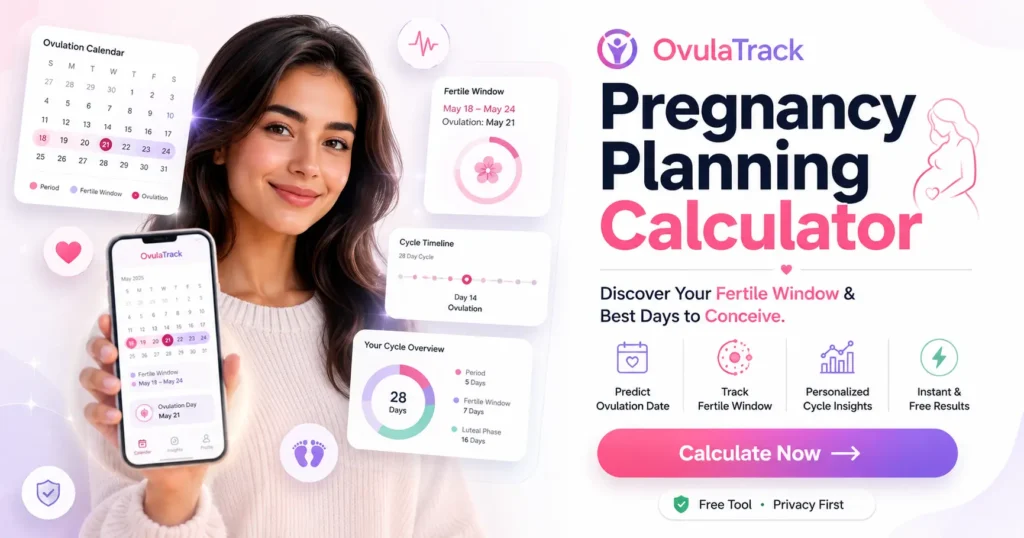
Ovulation Calculator: Predict Your Fertile Window & Best Days to Conceive with OvulaTrack
Introduction Planning for pregnancy starts with understanding your menstrual cycle and knowing when you’re most fertile. If you’re trying to conceive, identifying your ovulation date and fertile window can significantly improve your chances of pregnancy. That’s where the OvulaTrack Ovulation Calculator comes in. The OvulaTrack Ovulation Calculator is a free and easy-to-use online tool that helps you estimate your ovulation date, fertile days, and the best time to conceive based on your menstrual cycle. Whether you’re planning your first pregnancy or simply tracking your reproductive health, this calculator provides quick and reliable estimates to support your fertility journey. In this comprehensive guide, you’ll learn how an ovulation calculator works, how to use it, factors that affect ovulation, and practical tips to improve your chances of conception. What Is an Ovulation Calculator? An Ovulation Calculator is an online fertility tool that estimates the day you’re most likely to ovulate based on your menstrual cycle information. Ovulation is the process where one mature egg is released from the ovary. Since the egg survives for only 12–24 hours, identifying this period is essential for anyone trying to get pregnant. The OvulaTrack Ovulation Calculator predicts: Instead of manually counting cycle days, the calculator provides instant and easy-to-understand results. How Does the OvulaTrack Ovulation Calculator Work? The OvulaTrack calculator uses your menstrual cycle information to estimate ovulation. You simply enter: Using standard fertility calculations, the tool estimates your most fertile days and expected ovulation date. For women with regular menstrual cycles, this provides a useful prediction for pregnancy planning. Why Is Ovulation Important? Ovulation is the most fertile phase of your menstrual cycle. When the ovary releases an egg, it travels through the fallopian tube where it can be fertilized by sperm. Since the egg survives for about 24 hours, timing intercourse correctly increases the chances of pregnancy. Healthy sperm can survive inside the female reproductive tract for up to five days, making the fertile window longer than the ovulation day itself. What Is the Fertile Window? The fertile window is the period during which pregnancy is most likely. It usually includes: These six days offer the highest probability of conception because sperm can survive for several days before the egg is released. How to Use the OvulaTrack Ovulation Calculator Using the calculator takes less than a minute. Step 1: Enter Your Last Menstrual Period Choose the first day of your last period. Step 2: Select Your Cycle Length Common cycle lengths include: Step 3: Enter Your Period Length Most menstrual periods last between 3 and 7 days. Step 4: Click Calculate The calculator instantly predicts your fertility timeline. Step 5: Review Your Results You’ll receive: How Is Ovulation Calculated? The OvulaTrack calculator follows widely accepted fertility principles. Ovulation Date Ovulation generally occurs about 14 days before your next expected period. For example: These estimates may vary depending on individual hormonal patterns. Understanding Your Results After using the calculator, you’ll see several important dates. Estimated Ovulation Date The day your body is most likely to release an egg. Fertile Window The days when pregnancy is most likely. Peak Fertility Days Usually one day before ovulation and the ovulation day itself. Next Menstrual Period The calculator also estimates the expected start date of your next period. Signs of Ovulation Many women notice physical changes during ovulation. Clear Cervical Mucus Mucus becomes slippery, stretchy, and similar to egg whites. Mild Pelvic Pain Some women experience slight cramping on one side of the abdomen. Increased Libido Hormonal changes may naturally increase sexual desire. Breast Tenderness Mild breast discomfort can occur during ovulation. Basal Body Temperature Body temperature rises slightly after ovulation and remains elevated until the next menstrual cycle. Factors That Affect Ovulation Several lifestyle and medical conditions may influence ovulation. Irregular Menstrual Cycles Irregular cycles make ovulation more difficult to predict. PCOS Polycystic Ovary Syndrome is one of the most common causes of irregular ovulation. Stress Physical and emotional stress can delay ovulation. Weight Changes Being underweight or overweight may affect hormone balance. Thyroid Disorders Thyroid problems can interfere with regular menstrual cycles. Certain Medications Some medications may impact fertility and ovulation. Tips to Improve Your Chances of Pregnancy Healthy lifestyle habits support fertility. Eat a Balanced Diet Focus on: Take Folic Acid Healthcare professionals often recommend folic acid before conception to support early fetal development. Exercise Regularly Moderate exercise supports overall health and hormonal balance. Maintain a Healthy Weight A healthy BMI can improve reproductive health. Get Enough Sleep Aim for 7–9 hours of quality sleep each night. Stay Hydrated Drinking enough water supports overall wellness. Reduce Stress Yoga, meditation, and breathing exercises may help manage stress levels. Avoid Smoking and Excessive Alcohol These habits can negatively affect fertility in both men and women. Who Should Use an Ovulation Calculator? The OvulaTrack Ovulation Calculator is ideal for: Benefits of the OvulaTrack Ovulation Calculator Using OvulaTrack offers many advantages. Example Ovulation Calculation Let’s look at a simple example. Last Menstrual Period: 5 August Cycle Length: 28 Days Period Length: 5 Days Estimated Results Remember that these are estimates and actual ovulation may vary. Common Mistakes While Tracking Ovulation Avoid these common errors. Tracking your cycle consistently over several months provides more reliable information. Pregnancy Planning Checklist Before trying to conceive, consider the following checklist. ✔ Track your menstrual cycle ✔ Know your fertile window ✔ Maintain a healthy weight ✔ Eat nutritious foods ✔ Take folic acid ✔ Stay physically active ✔ Sleep 7–9 hours daily ✔ Drink enough water ✔ Reduce stress ✔ Avoid smoking ✔ Limit alcohol consumption ✔ Schedule a health check-up if needed Frequently Asked Questions What is an Ovulation Calculator? An ovulation calculator predicts your ovulation date and fertile window using your menstrual cycle information. How Accurate Is the OvulaTrack Ovulation Calculator? It provides reliable estimates for women with regular menstrual cycles. However, ovulation may vary because of stress, illness, hormones, or medical conditions. When Is the Best Time to Get Pregnant? The highest chance of pregnancy is usually one to two days before ovulation and on the day of ovulation. Can I Get Pregnant