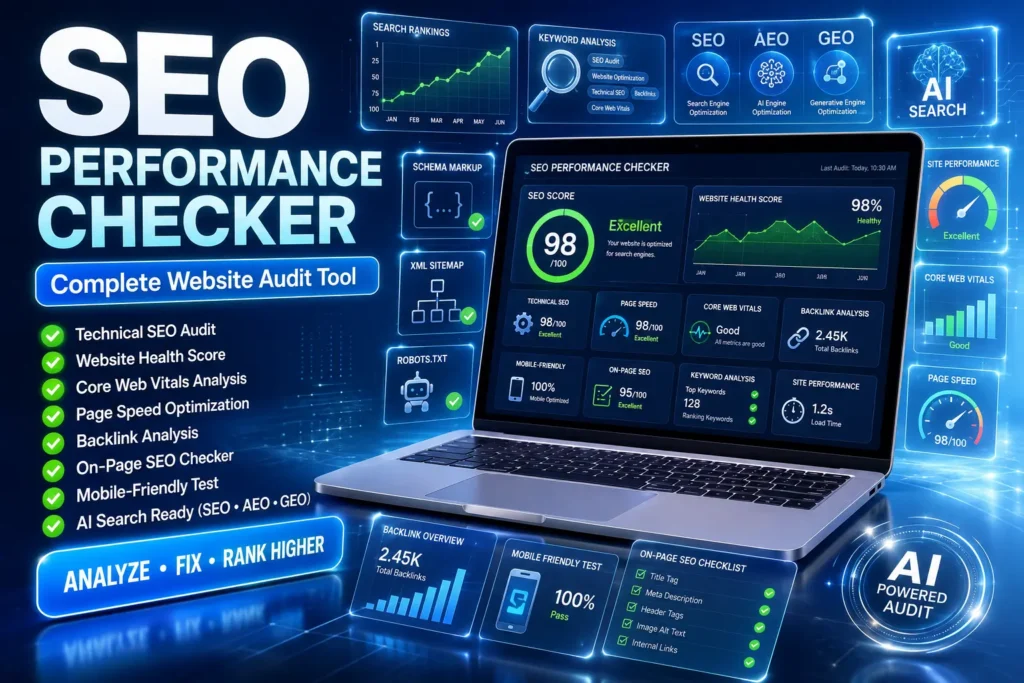
SEO Performance Checker – Complete Website Audit Tool to Analyze and Improve Your SEO Performance
Introduction If your website isn’t ranking on Google, attracting organic traffic, or generating leads, the problem often lies in your website’s SEO performance. Many website owners spend months creating content and building pages, but without a proper SEO audit, hidden technical and on-page issues can prevent those efforts from delivering results. An SEO Performance Checker is a powerful website audit tool that analyzes your site’s health, identifies optimization opportunities, and provides actionable recommendations to improve rankings, user experience, and search engine visibility. Whether you own a business website, blog, eCommerce store, portfolio, or agency website, regularly auditing your SEO helps ensure your site follows Google’s latest best practices while remaining optimized for AI-powered search engines like ChatGPT, Google AI Overviews, Gemini, and Perplexity. In this guide, you’ll learn everything about SEO performance checking, including what it measures, why it matters, essential audit features, and how to improve your website’s SEO score. What is an SEO Performance Checker? An SEO Performance Checker is an online audit tool that evaluates your website’s search engine optimization. It scans multiple SEO factors such as technical SEO, on-page optimization, page speed, mobile usability, content quality, internal linking, and website security. Instead of manually reviewing every page, the tool automatically detects issues that may be affecting your rankings. A comprehensive SEO checker provides insights into: The goal is simple: identify problems before search engines do and fix them to improve organic visibility. Why Every Website Needs an SEO Audit Search engine optimization is constantly evolving. Google regularly updates its algorithms, user expectations change, and competitors continue improving their websites. Without regular SEO audits, your website may develop hidden issues such as: These issues can reduce your rankings even if your content is excellent. Regular SEO audits help you: How SEO Performance Impacts Google Rankings Google evaluates hundreds of ranking factors before deciding where your website appears in search results. Some of the most important include: An SEO Performance Checker helps identify weaknesses in these areas so you can improve your chances of ranking higher. The healthier your website is, the easier it becomes for search engines to crawl, understand, and rank your pages. Common SEO Problems Found by Audit Tools Many websites unknowingly suffer from SEO issues that limit their visibility. Common problems include: Missing Meta Titles Search engines rely on title tags to understand page topics. Duplicate Meta Descriptions Duplicate descriptions reduce click-through rates and create confusion. Broken Internal Links Broken links negatively affect user experience and website crawlability. Slow Website Speed Pages that load slowly often experience higher bounce rates and lower rankings. Missing Image Alt Text Images without descriptive alt text reduce accessibility and miss image search opportunities. Thin Content Pages with very little valuable content struggle to compete in search results. Missing Structured Data Schema markup helps search engines better understand your content and increases eligibility for rich results. Mobile Usability Problems Since Google uses mobile-first indexing, poor mobile experiences directly impact rankings. What Does an SEO Performance Checker Measure? A complete SEO audit tool evaluates multiple aspects of your website instead of focusing on just one ranking factor. Website Health Score Most SEO tools provide an overall health score representing your site’s optimization level. A higher score usually indicates fewer technical issues and better optimization. Technical SEO Analysis Technical SEO focuses on how search engines access and understand your website. The audit typically checks: On-Page SEO Analysis On-page SEO examines how well each page is optimized. It reviews: Content Quality Evaluation Modern SEO isn’t only about keywords. Search engines evaluate whether your content: High-quality content generally performs better than keyword-stuffed articles. Internal Linking Structure Internal links distribute authority across your website. A performance checker identifies: Good internal linking helps both users and search engines discover important pages. Mobile Friendliness More than half of all web traffic comes from mobile devices. SEO audit tools analyze: A mobile-friendly website improves both rankings and user satisfaction. Page Speed Analysis Website speed plays a major role in user experience. An SEO Performance Checker evaluates: Even a one-second improvement in loading speed can positively affect conversions and engagement. Core Web Vitals Analysis Core Web Vitals are Google’s official user experience metrics. Every SEO audit should include: Largest Contentful Paint (LCP) Measures how quickly the largest visible content loads. Recommended:Less than 2.5 seconds Interaction to Next Paint (INP) Measures how responsive your website feels after user interaction. Recommended:Less than 200 milliseconds Cumulative Layout Shift (CLS) Measures unexpected layout movement while a page loads. Recommended:Less than 0.1 Improving these metrics enhances both user experience and search performance. Website Security Audit Search engines prioritize secure websites. A complete SEO audit checks: Visitors are more likely to trust and engage with secure websites. Crawlability and Indexability Even high-quality content cannot rank if search engines cannot crawl or index it. An SEO checker verifies: Fixing crawl issues ensures your important pages appear in search results. Features of a Good SEO Audit Tool The best SEO Performance Checker should offer more than just a basic website score. Look for features such as: Website SEO Score A quick overview of your site’s overall optimization. Keyword Optimization Checker Analyzes whether target keywords are naturally placed throughout your content. Meta Tag Analysis Reviews title tags and meta descriptions for length, uniqueness, and relevance. Heading Structure Checker Ensures pages use a logical H1, H2, and H3 hierarchy. Image SEO Analysis Checks: URL Structure Evaluation Reviews URLs for readability, keyword usage, and search engine friendliness. Duplicate Content Detection Identifies pages with duplicate or near-duplicate content that may confuse search engines. Schema Markup Validation Confirms structured data is correctly implemented for rich search results. Open Graph and Social Tags Checks whether your pages display correctly when shared on social media platforms. Why Regular SEO Performance Monitoring Matters SEO is not a one-time task. Your website changes over time as you publish new content, redesign pages, install plugins, or update products. Regular SEO monitoring helps you detect problems before they impact your rankings. Monthly SEO audits allow you to: Businesses that consistently monitor their SEO